

There’s something magical about Spiti Valley — a land where the winds seem to whisper ancient Buddhist chants, where stark moonscapes meet sapphire skies, where every mountain seems to stand as a silent guardian. If you’ve ever felt stuck in the daily grind and whispered to yourself, “I want to go somewhere that resets my soul,” then Spiti might just be the answer you’ve been searching for.
But Spiti isn’t just a destination — it’s a journey, a test of patience, spirit, and adventurous heart.
Before we dive into the how of reaching Spiti, let’s set the stage with a few basics that every traveler needs to know.
Where Is Spiti Valley?
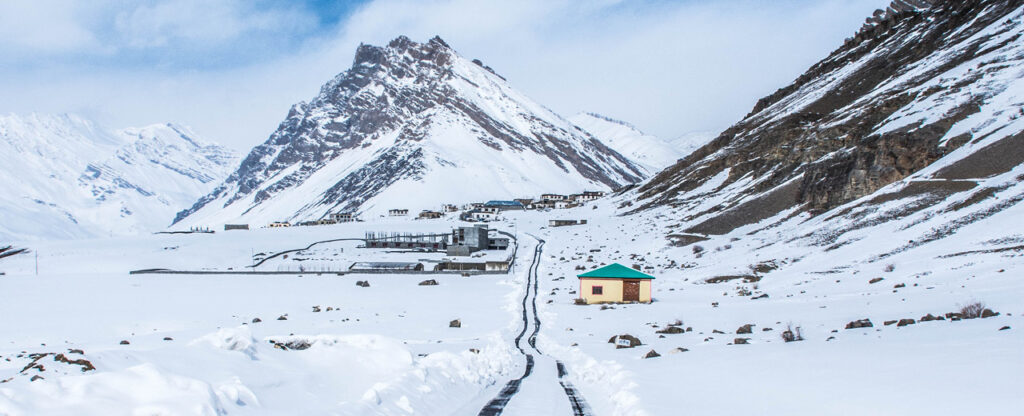
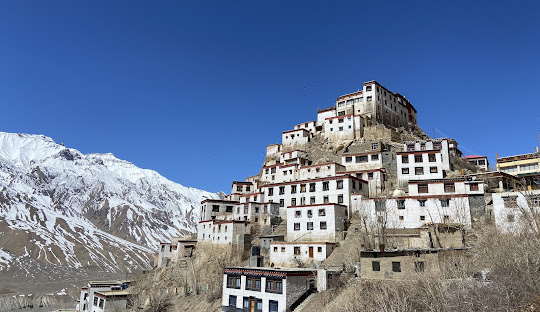
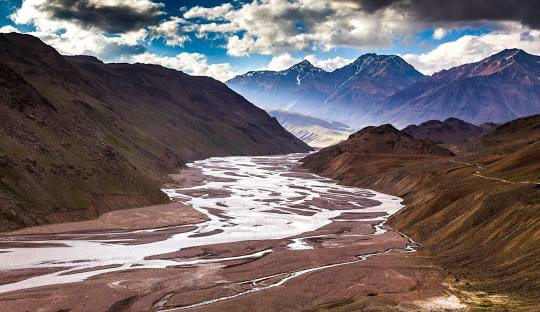
Spiti Valley is located in Himachal Pradesh, India — tucked away in the Trans-Himalayan region, near the border with Tibet. It’s often called the “Cold Desert” because of its stark terrain, high altitude, and sparse vegetation. The main town most travelers aim for is Kaza, which serves as the gateway to the entire region.
Delhi to Spiti Valley – How Far Is It?
If you’re starting from Delhi, the road trip to Spiti Valley is one of the most epic journeys you can take by road in India. Depending on the route you choose:
- Via Shimla (NH5 + NH505) – Around 770–800 km
- Via Manali (NH3 + Kunzum Pass) – Around 730–750 km
- Travel Time: Roughly 18–24+ hours by road, depending on conditions and stops.
Let’s be honest — that’s a long road trip. But the kind that demands to be savored, not rushed.
And trust me — when you finally crest a ridge and see the barren Spitian peaks stretch out before you, every hour on those winding mountain roads will feel incredibly worth it.
Nearest Airport to Spiti Valley
If you’d rather skip the first leg of the road journey from Delhi, flying part of the way is the next best option.
1. Bhuntar Airport (Kullu-Manali Airport)
- Nearest Airport to Spiti: ~245-250 km from Kaza
- Has flights from Delhi and Chandigarh
- From Bhuntar, you’ll need to continue by road (taxi or bus) toward Manali and then onward to Spiti — the journey normally takes 7-9 hours by car/bus. Spiti Marathon+1
2. Chandigarh International Airport
- Not as close as Bhuntar — but well-connected with flights from across India.
- It’s roughly 500 km from Spiti Valley. voyagersbeat.com
Pro Travel Tip:
Bhuntar is best during summer months when roads through Rohtang Pass and Kunzum Pass are open. If you plan to go during shoulder season, sometimes flying into Chandigarh gives you more flexibility because flights are more frequent and less weather-dependent.
Nearest Railway Station to Spiti Valley
Spiti does not have its own railway station — so you can’t take a train directly into the valley. But several options serve as good starting points:
Joginder Nagar Railway Station
- Around 360 km from Spiti Valley
- Closest train station by distance, but fewer train options. Spiti Marathon+1
Shimla Railway Station (Toy Train)
- Around 410-420 km from Spiti Valley
- A super scenic option if you want to experience the famed Kalka–Shimla toy train — one of India’s most beautiful rail journeys. incrediblespiti.com
Chandigarh Railway Station
- Around 490-500 km from Spiti Valley
- Better connectivity compared to Joginder Nagar or Shimla with trains from all over India. Indian Holiday
Unless you’re a railway enthusiast looking for scenic experiences, most travelers use the train to reach Chandigarh or Shimla, then continue by road.
Route Options from Delhi to Spiti Valley
Route 1 — Via Shimla → Reckong Peo → Nako → Kaza (All-Season Route)
- Distance: ~770–800 km
- Best Time: Year-round (weather permitting)
- Road Quality: Generally better than Manali route
- Travel Time: 2–3 days with breaks / sightseeing
Why choose this route?
This path is less extreme and remains open even when the Manali route is closed due to snow. You’ll also get a gradual climb, better acclimatization, and a chance to explore Kinnaur’s apple orchards and colorful villages like Kalpa, Nako, and Tabo along the way. voyagersbeat.com
This route is perfect for first-timers and those who prefer a balanced blend of safety and adventure.
Route 2 — Via Manali → Rohtang Pass → Kunzum Pass → Kaza (Seasonal Adventure Route)
- Distance: ~730–750 km
- Best Time: Usually June to October (only when snow clears)
- Travel Time: 1.5–2 days from Delhi
If your soul craves raw adventure, this route is it.
You’ll drive through Rohtang Pass — one of the most iconic Himalayan passes — and then climb higher over Kunzum Pass before descending into Spiti Valley.
Note:
This road is closed in winters (roughly Oct–May) due to snow. Always check up-to-date road conditions before you leave.
Public Transport — Can You Take a Bus?
Yes — buses do operate, but there are a few things to know:
HRTC Buses (Himachal Road Transport Corporation)
- Seasonal buses from Manali to Kaza (summer season)
- Shimla/Reckong Peo to Kaza buses are more reliable year-round
- Some buses run from Delhi/Chandigarh to Reckong Peo during peak seasons voyagersbeat.com
Shared Taxis/Jeeps
- Plentiful in Manali and Shimla during peak season
- Cheaper than private taxis
- Typically depart when full
If you love meeting fellow travelers, swapping stories along hairpin bends, and watching those Himalayan giants grow bigger as you climb — these shared options are part of the soul of Spiti road travel.
Personal Touch — What the Journey Feels Like
Imagine leaving Delhi early in the morning — the city’s chaos fading behind you as the air begins to smell like pine. The concrete jungle gives way to fields, then hills, and eventually silence.
Hours pass.
You climb.
The engine hums. Your playlist rolls.
You stop for tea at a tiny dhaba where the chai tastes infinitely better because you’re higher than the clouds.
One last hairpin. And suddenly — the cold desert unfolds.
Stark. Beautiful. Eternal.
This isn’t just another trip.
It’s proof that adventure still exists — not in Instagram filters, but right out there, on winding roads, in tire tracks, and on the faces of people who choose to chase something bigger than routine.
Travel Essentials – Before You Go
Best Time to Visit
- May to October: Roads open, scenic views.
- Monsoon Risk: Landslides on Shimla side.
- Winters: Roads often closed due to snow. hawamahaltickets.com
Permits
Foreign nationals require an Inner Line Permit (ILP) for parts of Spiti. Indian citizens should carry valid ID and vehicle documents. On The Eve
Altitude & Health
Spiti towns like Kaza are at high altitude. Drink water, pace your ascent, and listen to your body.
Vehicle Tips
If driving:
- A high-clearance vehicle is strongly recommended.
- Fuel up in Manali or Reckong Peo — fuel stations thin out afterward.
Sample Itinerary (Road Trip Version)
Here’s a friendly plan to turn the long road into an unforgettable journey:
Day 1: Delhi → Shimla
Start early. Reach by evening. Explore Mall Road.
Day 2: Shimla → Reckong Peo (via Narkanda)
Ride through apple orchards, snow-capped peaks in sight.
Day 3: Reckong Peo → Nako → Tabo
Slow elevation changes — perfect acclimatization.
Day 4: Tabo → Kaza
You’ve arrived at the heart of Spiti!
Day 5 – 7: Explore Spiti
Visit Key Monastery, Kibber Village, Hikkim (highest post office in India), Chandratal Lake, Dhankar Monastery.
Final Words — Why This Is More Than Just a “Trip”
Some landscapes change you — not because they’re beautiful (though Spiti is stunning), but because they’re true. Truth is unfiltered and raw. It’s in the altitude, the silence, the emptiness that fills you instead of clutter.
Reaching Spiti from Delhi isn’t easy. It isn’t fast. But it is rewarding — and real.
So when you’re planning, don’t just think about distances, airports, stations, or buses.
Think about who you’ll become when you make it there.
That’s the real journey.
Where is Spiti Valley located from Delhi?
Spiti Valley is located in Himachal Pradesh, India. It forms part of the Lahaul and Spiti district and lies close to the India–Tibet border.
Where is Spiti Valley on the map?
On the map, Spiti Valley is situated in north-eastern Himachal Pradesh, between Ladakh to the north, Kinnaur to the south, and Tibet to the east. It lies at an average altitude of around 12,500 feet above sea level.
What is the exact location of Spiti Valley?
Spiti Valley is a high-altitude cold desert located in the Trans-Himalayan region of Himachal Pradesh. The valley follows the Spiti River, with Kaza serving as its main town and administrative center.
What is the temperature in Spiti Valley?
Spiti Valley experiences extreme temperatures:
– Summer (May–September): 5°C to 20°C
– Winter (October–March): –10°C to –30°C or even lower
Due to its altitude, temperatures can change rapidly, even within a single day.
What is the weather like in Spiti Valley?
Spiti Valley weather is mostly cold and dry throughout the year. Summers are cool with clear skies, while winters are harsh with heavy snowfall, frozen rivers, and road closures. Rainfall is minimal compared to other Himalayan regions.
What is the best time to visit Spiti Valley?
The best time to visit Spiti Valley is from June to September. During these months, roads are open, weather is pleasant, and most villages are accessible. This is also the ideal time for road trips, sightseeing, and photography.
Is Spiti Valley open in winter?
Spiti Valley in winter is extremely challenging. From November to April, most roads—especially the Manali route—remain closed due to heavy snowfall. Only the Shimla–Kinnaur route may remain open, but travel requires experience and preparation.
Is it safe to visit Spiti Valley during winter?
Visiting Spiti Valley in winter is recommended only for experienced travelers. Sub-zero temperatures, limited medical facilities, and road blockages make it risky for first-time visitors.
Why is Spiti Valley called a cold desert?
Spiti Valley is called a cold desert because it receives very little rainfall, has barren landscapes, and experiences extreme cold temperatures—similar to desert conditions, but at high altitude.